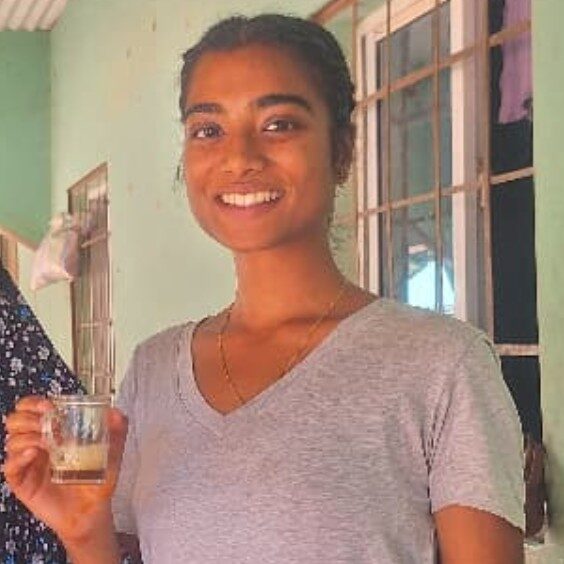
Every morning, way past the 6:30 a.m. wake-up of the village, I hear the metallic “kong kong” of my host siblings at my door. “Nyima, are you awake?” “Na dasamu!” Come eat breakfast. The toddler’s babbling, attempting to copy the older kids’ words, is unmistakable outside. From there, I try to trudge out as fast as I can. I need to either make my rounds around the village, starting at the market, then the school and the clinic, or do a morning watering of the tree nursery beds. Sometimes, overwhelmed, I sit in my bed as my mind goes into overdrive, cataloguing the list of tasks I need to finish. Yet the kids get me up with their raucous enthusiasm, and, some days, we eat porridge together from the family bowl (though most of it usually ends up on their clothes).
The sun is blazing even in the early morning when I go to greet my host moms and grandma. Grandma has just finished watering the banana trees in the garden, and Aiyaa is sweeping the mango leaves from the compound. Everything looks pristine, calm before the storm of schoolchildren ready to arrive for afternoon break.
Somanda be ñaadii? How is the morning? Kori I sinota baake. I hope you slept really well. Greeting is the morning’s affirmation, an acknowledgement of each member’s presence, an intention for the rest of the day to go well.

In the women’s big garden, I greet everyone with Al ninbara, Al ninbara—great work, great work. This is backbreaking work. The women bend over cracked reservoirs to reach water that has sunk deeper into the ground, then stoop over their garden beds to weed and water each plant. As I pass each woman tending her beds of onions, I exclaim, “Tiloo a Kandita baake!” A phrase we can all agree with, considering the rising heat (the sun is so hot!).
The garden stretches far, the beds lined up in neat rows. Everything is dry, the green beds a stark contrast. I struggled to care for just two beds of Irish potatoes, and I wonder how the rest of the women and girls, a lot younger than me, manage. When the harvest finally came, those two beds fed my host family of twelve for only a few weeks. I would need many, many more beds on top of that to grow onions, green peppers, guano peppers, tomatoes, and squash. There isn’t enough space or water in the garden to feed the entire family.
The women have transformed a dry piece of land into a productive garden through determination and labor. What limits the garden is not their commitment, but access to reliable water. Wells run low. Water must be fetched and carried. Beds that could be planted remain empty because there is simply not enough water to sustain them.
Water determines everything here.
This reality is what inspired our Peace Corps Partnership Program project. Working alongside the women’s garden group, we identified improvements to the garden’s water system that will allow water to be used more efficiently and reach more of the garden’s plots. The goal is simple: help the women grow more food with less labor and make the garden more resilient during the dry season.
Tomorrow morning, the children will still knock on my door to get me up, Grandma will water her banana trees, and the women will greet one another with Al ninbara before another day of work in the garden. The generous support from you allows the work to go further, helping women and their families build more reliable sources of income and nutrition.
About the Author
Divya Bhuvarahamurthy
Divya Bhuvarahamurthy is a Peace Corps Health Extension Volunteer serving in The Gambia, where she works alongside community members on projects related to nutrition, maternal and child health, and environmental sustainability. She is passionate about community-driven approaches to global health and increasing access to healthcare in underserved communities.